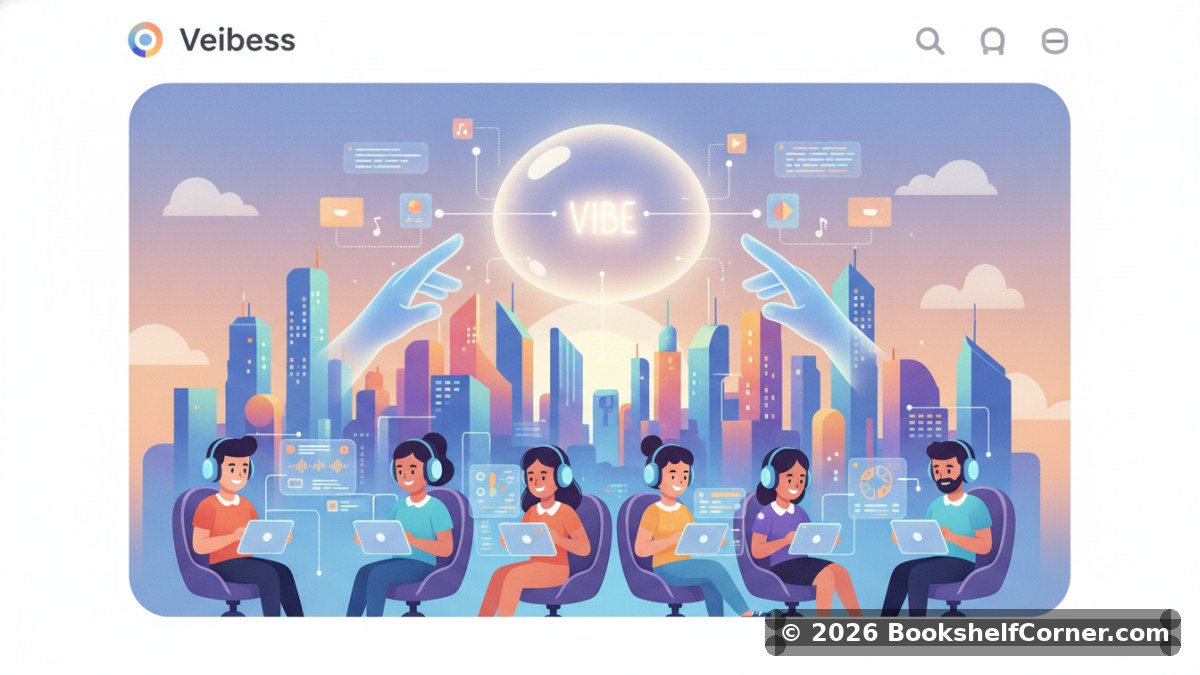
5 Tips to Get Started With Vibe Coding Today
Imagine sitting down to code and instead of wrestling with syntax errors and Stack Overflow rabbit holes, you simply flow. You describe what you want, your tools respond intelligently, and the software almost seems to build itself. That's the promise of vibe coding — a term coined by AI researcher Andrej Karpathy that describes a new, intuition-driven approach to software development powered by AI tools. Whether you're a seasoned developer curious about the hype or a total beginner who's always wanted to build something, vibe coding is lowering the barrier to entry like never before. Here are five practical tips to help you get started today.
1. Embrace the "Describe, Don't Dictate" Mindset
The biggest mental shift in vibe coding is moving from writing every line of code yourself to describing outcomes in plain language. Instead of thinking "I need to write a for-loop that iterates over an array," you think "I want to display a list of product names on the screen."
This mindset unlocks the full potential of AI coding assistants like GitHub Copilot, Cursor, or ChatGPT. The more clearly and naturally you describe your intent, the better your results will be. Don't worry about being technically precise at first — vibe coding rewards creative, conversational prompting over rigid, jargon-heavy instructions.
Practical tip: Before touching the keyboard, write a short paragraph in plain English describing what you want to build. Use that paragraph as your first prompt. You'll be surprised how far it gets you.
2. Choose the Right AI-Powered Environment
Your tools matter. Vibe coding works best when your development environment is tightly integrated with an AI assistant that can understand context, suggest completions, and even generate entire components on demand.
Popular Options to Explore
- Cursor: A VS Code fork built specifically for AI-assisted coding. It's one of the most popular choices among vibe coders right now.
- GitHub Copilot: Deeply integrated into VS Code and JetBrains IDEs, great for developers already familiar with traditional workflows.
- Replit with AI: An excellent browser-based option for beginners who don't want to set up a local environment at all.
- Bolt.new or Lovable: Full-stack app generators that let you describe an entire application and watch it scaffold in seconds.
Start with one tool and stick with it long enough to understand its strengths. Jumping between platforms too quickly is a common beginner mistake that kills momentum.
3. Build Something Small and Meaningful
One of the fastest ways to kill your motivation is to start with an overly ambitious project. Vibe coding thrives on quick wins and visible progress. Start with something small — a personal budget tracker, a playlist generator, a simple landing page for your freelance services.
The goal isn't to build a production-ready application on day one. The goal is to experience the flow of describing an idea, watching code appear, running it, tweaking it, and feeling that satisfying loop of rapid iteration. Small projects let you complete that cycle in hours, not months, and every completed cycle builds your confidence and your intuition.
Once you've shipped something small — even if it's just a working to-do app — you'll have a much clearer sense of how to scale your vibe coding practice into bigger ideas.
4. Learn Just Enough to Stay in Control
Vibe coding doesn't mean being completely ignorant of how code works. In fact, having a basic understanding of fundamentals — variables, functions, APIs, how a browser renders HTML — makes you dramatically more effective. You don't need to memorize syntax, but you do need to understand concepts.
Think of it like being a film director. You don't need to operate the camera yourself, but you need to know enough about cinematography to communicate your vision clearly and recognize when something isn't working.
If you feel your fundamentals are shaky, there are fantastic resources available — including in-depth programming and software development ebooks on platforms like Bookshelf Corner, where indie authors share practical, focused guides that cut straight to what matters without bloating you with unnecessary theory.
5. Iterate Fast, Break Things, and Reflect
Vibe coding is inherently experimental. The best vibe coders are the ones who aren't afraid to try something, see it fail, and try again — fast. The cost of experimentation has dropped to nearly zero when an AI can rewrite a component in seconds.
Build a habit of short iteration cycles: describe a feature, generate code, test it immediately, note what worked and what didn't, and refine your prompt. Keep a simple journal or notes file where you log what prompts got great results. Over time, you'll develop a personalized "prompt intuition" that makes your vibe coding sessions increasingly productive.
Also, don't skip the reflection step. Take five minutes after each session to review the code the AI generated. You'll slowly absorb patterns and improve your ability to guide the AI more effectively next time.
Ready to Ride the Wave?
Vibe coding isn't a shortcut for lazy developers — it's a new creative paradigm that rewards curiosity, clear thinking, and a willingness to experiment. The tips above aren't just theory; they're the practical foundation that separates vibe coders who build real things from those who just talk about it. Start small, pick your tool, describe boldly, and keep iterating. The best time to start was yesterday — the second best time is right now. Happy coding.
Related Books
The 1% Student: Small Daily Habits That Build an Extraordinary Academic Life
Arskan. G

Stack and Succeed: The Busy Professional's Guide to Building Habits That Actually Last
Arskan. G

The Adaptive Mind: Harnessing Brain Science for Lasting Positive Change
Arskan. G

Steady Ground: Daily Habits for a Calmer, More Resilient Mind
Arskan. G
Digital Products for Beginners: From Idea to Profitable Launch
Arskan. G
Looking for quality ebooks from independent authors?
Thousands of titles, personal watermark, read online or download.
Browse Catalog →