Vibe Coding vs Traditional Dev: Key Differences

Imagine sitting down at your laptop, describing an app idea in plain English, and watching functional code appear almost instantly — no syntax memorization, no Stack Overflow rabbit holes, no four-hour debugging sessions. That's the promise of vibe coding, a term that has exploded across developer communities in 2024 and 2025. But seasoned engineers are raising their eyebrows. Is vibe coding a genuine revolution, or just a shortcut that cuts too many corners? To answer that, we need to put it side by side with traditional development and examine exactly where the two approaches diverge.
What Is Vibe Coding, Exactly?
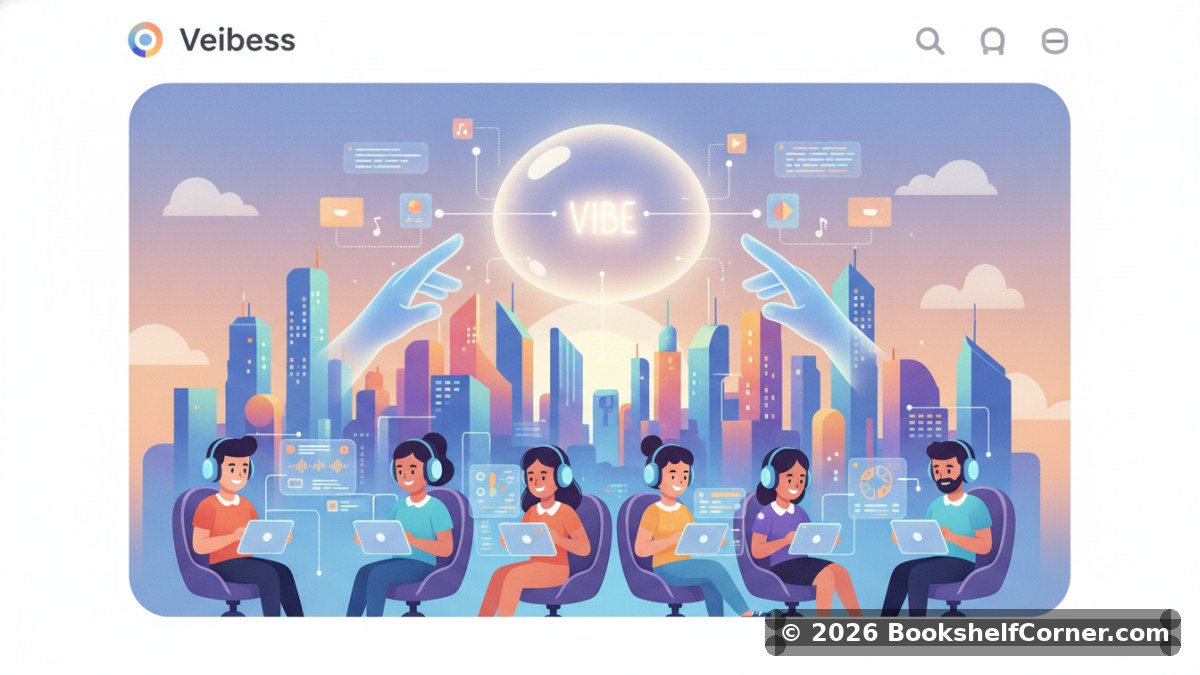
The term "vibe coding" was popularized by AI researcher Andrej Karpathy, who described a workflow where the developer largely surrenders control to an AI model — typing natural-language prompts, accepting generated code, and iterating through conversation rather than manual editing. Tools like GitHub Copilot, Cursor, and ChatGPT are the typical engines behind this approach.
In a vibe coding session, you might write: "Build me a responsive landing page with a contact form and dark mode toggle." The AI generates the HTML, CSS, and JavaScript. You review it, tweak the prompt, and ship. The emphasis is on speed, intent, and flow — hence the word "vibe."
What Is Traditional Development?
Traditional development is what most computer science graduates and self-taught engineers have practiced for decades. It involves:
- Writing code line by line in a chosen language
- Understanding data structures, algorithms, and design patterns
- Using version control, testing frameworks, and CI/CD pipelines
- Debugging systematically using logs, breakpoints, and documentation
Traditional developers own their codebase deeply. They know why every function exists and can reason about performance bottlenecks, security vulnerabilities, and scalability trade-offs.
Key Differences at a Glance
1. Skill Requirements
Traditional development demands a significant learning investment. You need to understand not just syntax but underlying computer science concepts — memory management, API design, database normalization, and more. Vibe coding dramatically lowers the barrier to entry. A non-programmer with a clear product vision can prototype a working app in an afternoon. However, understanding what the AI generates still benefits enormously from foundational knowledge. Bugs don't disappear just because AI wrote the code.
2. Speed and Iteration
This is where vibe coding shines brightest. Prototyping a feature that might take a traditional developer two days can be sketched out in two hours using AI assistance. For startups, solo founders, or creatives testing an idea, this speed is transformative. Traditional development, while slower in early stages, often pays dividends later through cleaner architecture and fewer surprises at scale.
3. Code Quality and Maintainability
Here's where traditional developers score a clear advantage. AI-generated code can be verbose, inconsistent, or subtly flawed. It may work perfectly for a demo but crumble under real-world load or edge cases. Traditional developers write with maintainability in mind — clear variable names, modular functions, and comprehensive documentation. Vibe-coded projects often accumulate technical debt quickly, especially when the original "viber" moves on and someone else inherits the codebase.
4. Debugging and Problem-Solving
When things go wrong in traditional development, engineers have a mental model of the system. They can isolate the problem logically. In vibe coding, debugging can feel like detective work on code you didn't fully write — and don't entirely understand. This is one of the most significant practical challenges that vibe coding skeptics point to, and it's a fair concern.
5. Creativity and Ownership
Surprisingly, vibe coding can unleash creativity for people who previously felt locked out of software creation. Writers, designers, educators, and entrepreneurs can now build tools tailored to their specific needs. Traditional development, while deeply creative in its own right, can sometimes feel gated behind years of prerequisite learning.
Which Approach Should You Choose?
The honest answer: it depends on your goal. If you're validating an idea, building a side project, or creating a personal tool, vibe coding is a genuinely powerful accelerator. If you're building a production system that handles sensitive data, processes financial transactions, or needs to scale to millions of users, traditional development principles are non-negotiable — though AI tools can still assist alongside.
Many experienced developers are finding a middle path: using AI to handle boilerplate and repetitive tasks while applying traditional engineering judgment to architecture and critical logic. That hybrid approach may ultimately be the most pragmatic of all.
Keep Learning, Keep Building
Whether you're a seasoned engineer exploring AI tools or a curious beginner stepping into the world of coding for the first time, the landscape has never been more exciting — or more full of nuance. If you want to go deeper on topics like AI-assisted development, software design, and the future of tech, explore the growing library of indie ebooks on bookshelfcorner.com. Independent authors are writing some of the most cutting-edge, practical, and honest guides on these subjects — often long before traditional publishers catch up.
Vibe coding isn't replacing traditional development. It's expanding who gets to build — and that, in the end, is a very good thing.
Related Books
The 1% Student: Small Daily Habits That Build an Extraordinary Academic Life
Arskan. G

Stack and Succeed: The Busy Professional's Guide to Building Habits That Actually Last
Arskan. G

The Adaptive Mind: Harnessing Brain Science for Lasting Positive Change
Arskan. G

Steady Ground: Daily Habits for a Calmer, More Resilient Mind
Arskan. G

Digital Products for Beginners: From Idea to Profitable Launch
Arskan. G
Looking for quality ebooks from independent authors?
Thousands of titles, personal watermark, read online or download.
Browse Catalog →